



Bovone Glass Silvering Lines
Mirror Silvering LinesFully automated, modular glass silvering lines for producing consistently high-quality flat and parabolic mirrors in sizes up to 6000 × 3200 mm.
Specifications
- Machine Type
- Fully Automated Glass Silvering Production Line
- Production Process
- Glass Preparation, Silvering, Protective Coating, Curing, Cooling and Offloading
- Maximum Glass Size
- Up to 6000 × 3200 mm
- Mirror Types
- Flat Mirrors, Architectural Mirrors, Furniture Mirrors and Parabolic Solar Mirrors
- Line Configuration
- Fully Customised and Modular
- Glass Loading
- Manual, Automatic or Robotic, Subject to Configuration
- Initial Surface Preparation
- Washing, Degreasing and Cerium-Oxide Treatment
- Chemical Sensitisation
- Integrated
- Silver Application
- Automatic Silver-Based Solution Application
- Protective Metallic Treatment
- Copper Plating or Passivation, Subject to Selected Process
- Chemical Rinsing
- Integrated
- Chemical-Section Extraction
- Enclosed Reaction Zones with Air Extraction
- Drying
- Automatic Glass-Surface Drying
- Pre-Paint Heating
- Integrated
- First Protective Coating
- Automatic Curtain Coating
- Intermediate Oven
- Flash-Off, Heating and Forced-Air Cooling
- Second Protective Coating
- Automatic Curtain Coating
- Final Oven
- Flash-Off, Drying and Paint Curing
- Oven Heating
- Infrared Lamps or Gas Panels, Subject to Configuration
- Cooling
- Forced-Air and Water-Spray Cooling
- Final Cleaning
- Acid Cleaning, Washing and Drying
- Glass Offloading
- Automatic or Robotic, Subject to Configuration
- Operating Pattern
- Suitable for Continuous and Three-Shift Production
- Manufactured
- Italy
Key features
- Fully automated mirror-production process
- Transforms prepared glass into finished mirrors
- More than 70 years of Bovone silvering experience
- Custom-designed around individual production requirements
- Processes glass up to 6000 × 3200 mm
- Suitable for continuous three-shift production
- Modular and progressively configurable design
- Manual, automatic or robotic glass loading
- Integrated initial glass washing
- Cerium-oxide degreasing and surface preparation
- Second washing stage for complete cerium removal
- Configurable chemical application process
- Automatic chemical sensitisation
- Automatic silver-solution application
- Copper-plating or passivation capability
- Controlled chemical rinsing
- Enclosed reaction zones
- Integrated air extraction
- Automatic drying and pre-paint heating
- First automatic curtain-coating section
- Intermediate solvent flash-off
- Infrared or gas-panel heating
- Forced-air intermediate cooling
- Second automatic curtain-coating section
- Final paint drying and curing
- Controlled forced-air and water cooling
- Final acid cleaning
- Final acid cleaning
- Automatic offloading
- Consistent coating quality across large panels
- High and repeatable production quality
- Designed for reliability and continuous output
- Complete line assembled and tested before delivery
- Expandable as production requirements develop
- Designed and manufactured in Italy
About the Bovone Glass Silvering Lines
Bovone Glass Silvering Lines are fully automated and highly configurable production systems for transforming prepared glass sheets into finished mirrors.
Bovone has been developing equipment for mirror production since 1954, beginning with the automation of the galvanic copper-plating process used to protect the silver layer. Today, Bovone silvering lines combine more than 70 years of specialist experience with modular design, advanced process control and reliable continuous operation.
Each line is designed around the customer’s required glass dimensions, production capacity, chemical process, coating specification, level of automation and available factory space.
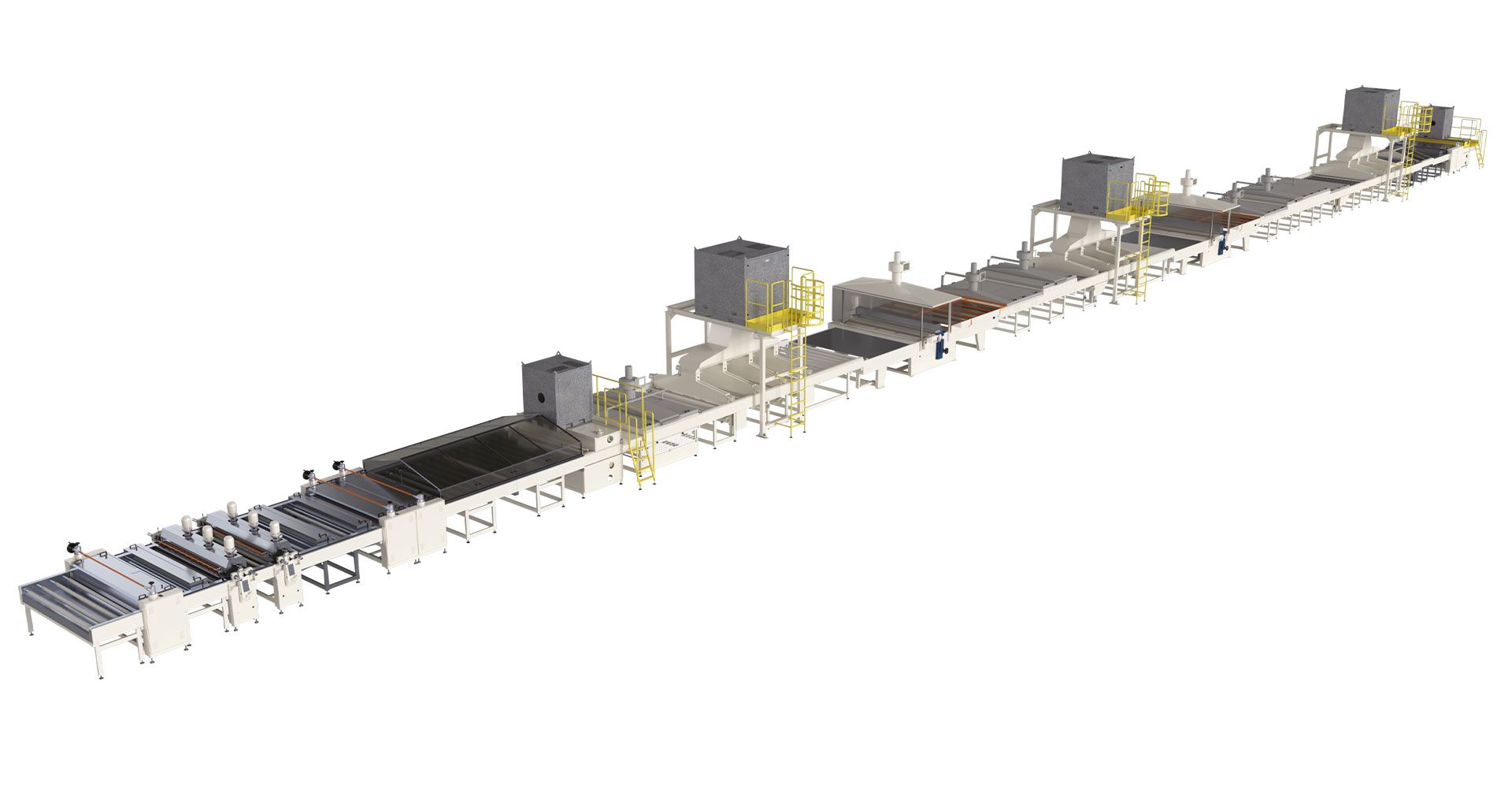
The complete process can incorporate glass loading, surface preparation, chemical sensitisation, silver application, copper protection or passivation, drying, protective paint coating, intermediate curing, final curing, cooling, cleaning and automatic offloading.
Glass sheets enter the line and pass through a controlled preparation process. Initial washing removes surface contamination before a dedicated degreasing section uses cup brushes and a cerium oxide solution to remove oxidation and remaining dirt from the surface that will be silvered.
A second washing stage then removes any remaining cerium before the glass reaches the chemical application area.
The chemical section is configured according to the selected mirror-production process and chemical supplier. The prepared glass surface is sensitised before a silver-based solution is applied evenly across the panel. Depending on the selected process, a copper-based protective layer or passivating treatment is then applied, followed by controlled rinsing.
Reaction areas are enclosed and equipped with air extraction to support process control and safe management of the chemical application stages.
After silvering, the glass enters the drying and pre-painting section. The surfaces are dried and the panel is heated to support adhesion between the metallic coating and the protective paint layers applied during the following stages.
The first curtain coater deposits an even layer of protective paint over the metallic film. The panel then passes through an intermediate oven incorporating solvent flash-off, controlled heating and air cooling before the second protective coating is applied.
A second curtain coater applies an additional layer of paint over the first, strengthening the protective backing and supporting the long-term durability of the finished mirror.
The final oven completes the flash-off, drying and curing of the protective paint. Heating can be provided using independently selected infrared lamps or gas-panel technology, depending on the final line design and process requirements.
The coated mirror then passes through a controlled cooling section. Forced-air fans and water-spray systems reduce the glass temperature before the final cleaning and unloading stages.
The final section removes any unwanted traces of silver from the underside of the panel using an acid-cleaning process. The glass is then washed, dried and automatically transferred from the production line as a completed mirror.
Bovone silvering lines can process glass up to 6000 × 3200 mm while maintaining consistent quality across the complete panel. They are suitable for high-volume production and demanding three-shift manufacturing environments where reliability and continuous output are essential.
The modular design allows the line to be configured around different chemical processes, production capacities and mirror types. Individual sections can also be integrated or expanded as production requirements develop.
Bovone assembles and tests each complete line at its production facility in Ovada, Italy. The system is then disassembled for transport and reassembled and commissioned at the customer’s site by specialist technicians.
The lines are suitable for manufacturing conventional flat mirrors, furniture mirrors, architectural mirror products and specialist parabolic mirrors used in concentrated solar-power applications.
Stone & Glass Group supplies Bovone glass silvering lines throughout the United Kingdom, Ireland and the Benelux, supported by project consultation, layout design, installation, commissioning, operator training, spare parts, servicing and comprehensive after-sales support.
Watch
The Bovone Glass Silvering Lines in action
Interested in the Bovone Glass Silvering Lines?
Speak to sales about pricing, lead times, and installation. We can also arrange demonstrations.
Book a Free Consultation